
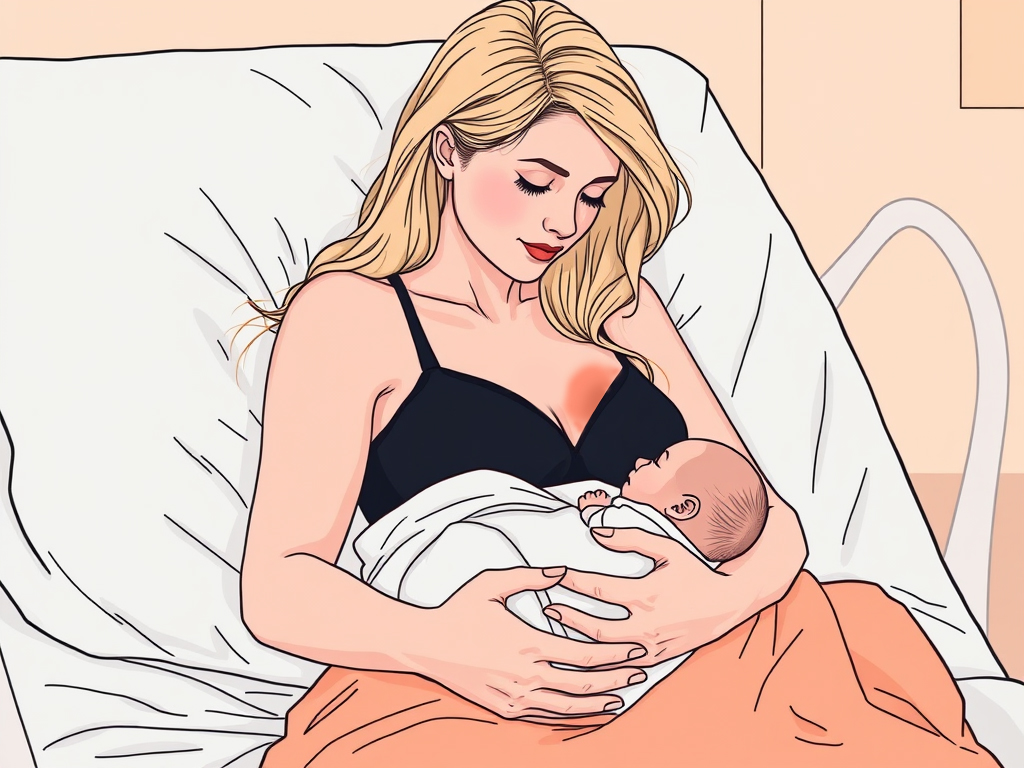
One year ago, whilst breastfeeding my newborn son, I had mastitis which turned into a life-threatening breast abscess, “the worst case seen in a long time”. It took 7 months to recover from: 12 breast specialists, 3 surgeons, 20 procedures, 500ml removed from my breast – plus a fight to have my baby stay with me in hospital.
I hope my mastitis and breast abscess journey will help other newly breastfeeding mothers.
I can’t quite believe where the time has gone, but this time last year I was settling into being a very new mum. I had a 4 week old baby, was really enjoying breastfeeding, and was finally starting to a bit more feel normal after my birth experience.
[Read: My Positive Birth Story]Sadly, one of the scariest health experiences for me was still to come. To be clear: my journey of recovering from mastitis and a breast abscess is not a normal one. Most breastfeeding women will get mastitis at one point or another – it’s toe-curlingly painful, hot and sore and generally pretty rough going. Thankfully, most women will have a course of antibiotics and get better within a week. Unfortunately, my tale is a cautionary one.
This is the first time I’ve properly tried to recount everything that happened – I’ve blocked much of it from memory, and packed it into a box in the back of my mind, as it was a very intense and emotional experience. I’ve had to come back to this piece a few times to write, especially as I still feel incredibly sad that it stole from me the ability to enjoy the first months with my newborn son. Things could have been so different so easily. It’s been cathartic, in a way, to retell, but mostly I’m hopeful it’ll help someone in the future avoid a similar experience.
I will say now though, that through it all and against all odds, I’m still breastfeeding 12 months later – and I am SO proud of myself. Breastfeeding, if you can do it, is the most rewarding bonding experience in the world, and I’m so glad I stuck to my guns and pushed through.
The problem no one told me about: mastitis
I read all the books, I did the classes, I spoke to my new mum friends on a regular basis, but at no point did I read or properly understand the severity of mastitis and the effects it can have on the body if left untreated.
Let’s rewind to July 2024: I was very tired after my anaemia / blood transfusion ordeal after the birth of my son, and my husband really stepped up to the plate. He took some extra time off work and would look after our son so I could sleep and recover. However, as any mum will know, newborns need to have milk every 3 hours. This meant I had no solid sleep to recover properly. As a result, despite breastfeeding going very well, I decided I’d like to pump my milk so I could get some more rest, and my husband could bottle feed our baby.
First lump and online misinformation
Using my new electric breast pump, I pumped a good amount of milk – as much as I could to fill up a couple of bottles. I thought this was a great idea, and didn’t think much of it once my son had consumed them. Continuing to breastfeed, I soon noticed that I had a lump at the top of my left breast that wasn’t going away.
The issue which I realised only later, was that at 4 weeks old, my breasts were still getting to grips with how much milk to produce. By pumping a lot, and then breastfeeding, but then not pumping again consistently, my breasts had started overproducing milk, and as such, weren’t being fully emptied via the breastfeeds. The milk leftover in the ducts became inflamed, causing mastitis.
Of course, I didn’t know this at the time.
I went online to see what to do about the lump. At the time (it has thankfully been updated since July 2024) the advice stately (wrongly!) to use a warm compress, massage gently and continue to feed. So, this is what I did.
The first lump went away after a few feeds and some massage, but a week later, it came back.
Second lump, silver nipple shields and GP for antibiotics
Feeling safe in the knowledge that I had successfully removed the first lump, here I went again – massage, hot shower and continuing to feed. I also placed silver nipple shields to ease my sore nipple, which started to feel very swollen. Unfortunately, with the days merging into one, I neglected to clean the shields enough (only once every couple of days), which collected milk and quickly became (in hindsight) bacteria-ridden. I also wasn’t able to take ibroprofen, an anti-inflammatory, as I was on blood thinning injections from my surgery post birth.
Soon, the lump was getting larger and my nipple was getting more sore. I continued the recommended advice, but with no luck on removing the lump. It was the Friday, the last day before the Doctors shut for the weekend – but I thought I’d be okay.
By Saturday I was having fever and chills, but reading up a bit about it, I thought it was normal for mastitis and continued to take paracetamol and (stupidly) decided to wait until the Monday to call the doctor.


[Images show the redness starting to show on my breast and my temperature at 40.4 degrees celsius]
Monday came around, by which point my breast was very sore and had regular fever and chills. I managed to get an appointment with my GP, who was quite shocked and prescribed me the antibiotic which I would soon become well acquainted: Flucloxacillin. He said he’d ring me on the following Friday, once the antibiotics had kicked in and check how I was getting on.
Follow up with GP and referral to breast surgeon / A&E
Friday 12th July came around, by which point I was starting to get very concerned. The lump had grown ginormous and didn’t seem like it was getting any better, I had had ongoing chills which combined with my fatigue of being a new mum was proving difficult. The doctor referred me to accident and emergency (the emergency room) as he thought I had a breast abscess, which is a medical emergency.
With my mum and son, we turned up at the local A&E department and said that I had a referral. I was told all the beds were taken and that I’d have to wait. After a long wait of many hours, my husband came and joined me and I was taken to the surgical department.
The problem was, the surgical team didn’t really know what to do with me. I was too far into postpartum to go into the maternity ward, and the breast clinic which specialised in the removal of breast assesses was closed until the Monday. Yet my infection markers indicated that I probably couldn’t wait until then.
After much back and forth, the doctors wanted to admit me. But they told me that my son couldn’t stay with me or visit. Panicking, I said that I couldn’t possibly do that. Eventually, after much push back to several male doctors, a very kind female doctor – who both understood how it is to be a new mum and thankfully headed up the entire team – agreed that I could go home, however I had to return to hospital visit 3 times a day over the weekend to have an IV antibiotic drip to counter the infection and be monitored.


[Images show the skin on my breast starting to turn like orange peel, and my breast turning entirely red and swollen]
Going to hospital 3 times a day
For 3 days, in excruciating pain, I left my baby with my husband morning, noon and evening, doing the 3 hour round trip to the hospital and back for my antibiotics. I was exhausted, still slightly anaemic, still bruised and with aching stitches from birth, still stumbling through learning how to be a new mum – and yet, somehow, still breastfeeding.
The following Monday finally came around, and I turned up to the surgical department with my mum and son, relieved that I would see the breast clinic and finally I could get the treatment I needed. However, soon my relief turned to fear which struck me like a cold bucket of water, when the doctor in charge told me that no referral to the breast clinic had been made for me, and that I wouldn’t be able to see them and that I should go home and wait to hear from them.
My breast at this point was red hot, peeling, the lump the size of a golf ball. My infection markers were spiking, I was in a lot of pain and my emotions were uncontrollable. I turned to my mum and burst into tears, sobbing how I was convinced they were going to send me home and I was going to die because I’d slipped through the net of patients, and no one knew what to do with me. My son was crying for me, when I was ushered into a side room by a doctor.
The doctor took pity on me and apologised for the mess up. They called the breast clinic after my mum insisted I be seen that day, and to the greatest relief, said I could be seen at 5pm.
The breast clinic and confirmation of a breast abscess
I walked into the clinic, and the most wonderfully kind team of breast nurses and doctors greeted me with real empathy. I will never forget how cared for I felt stepping into that building. They took one look at my breast – which was now entirely red and swollen from infection – and said I was the worst case of mastitis and a breast abscess they’d seen in a very long time.
They scanned my breast, and inserted a needle, pulling to extract as much as they could. Unfortunately, the abscess wasn’t liquid enough to remove much at all, and that I’d have to come back in a couple of days. It was painful, but I’d soon get used to it. The warm and kind female doctor warned me that often after the first aspiration, the infection may spread and I could get a fever.
Admitted to hospital
The next day, I started to feel really unwell. I had my final antibiotic IV scheduled for the evening. We were giving my son his first bath and I felt incredibly light headed and delirious. My heart thudding loudly and I felt so cold yet was roastingly hot. I took my temperature at home to see it 41 degrees celsius.
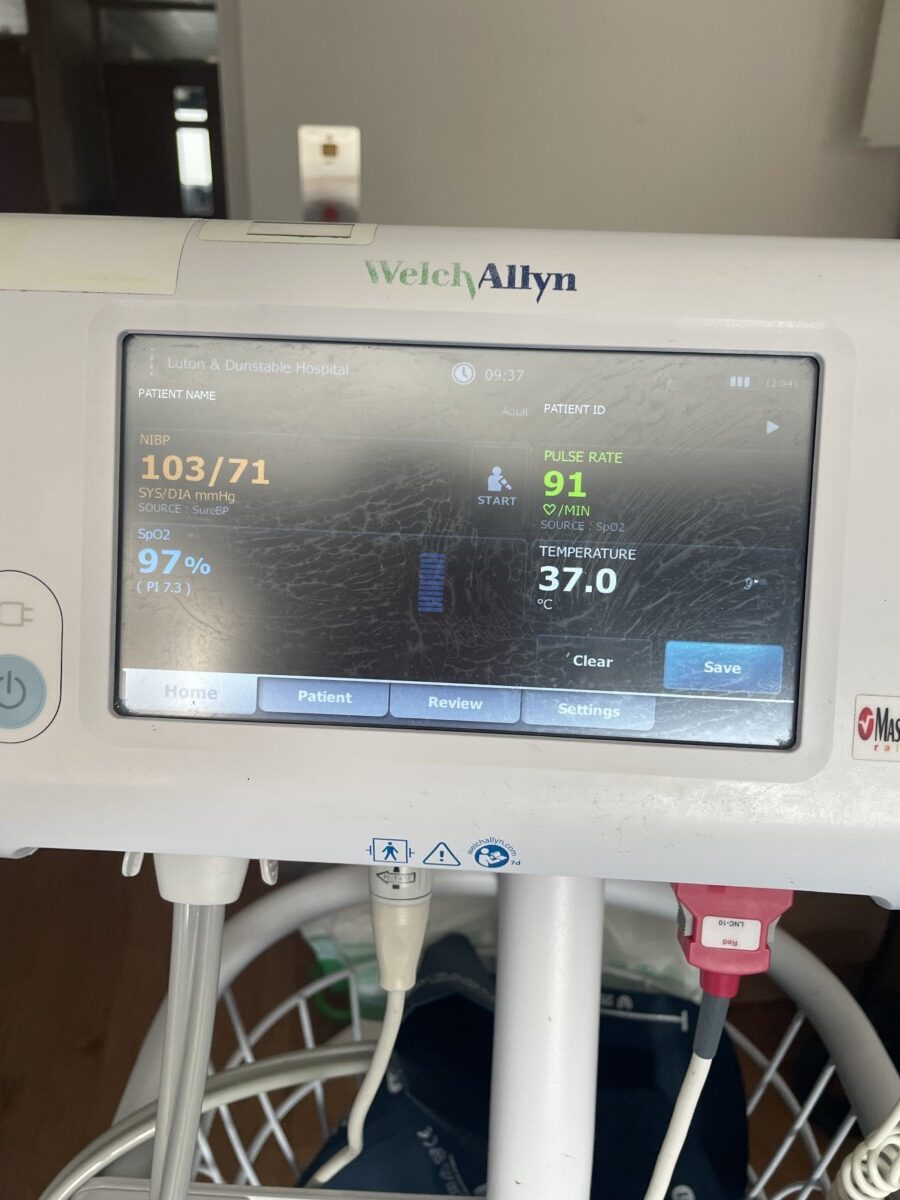
That evening, I went with my mum again to hospital, thankfully, she drove. I got to the surgical department – by this time I knew most of the nurses. One of them took my vitals and I watched as her eyes rounded and brow furrowed. She looked at me and called her colleague, asking if there was something wrong with the machine and to try again. It was correct: my resting heart rate was 160bpm and my temperature was 42 degrees celsius: life threateningly high.
This time, I knew I had to be admitted.


Fighting for my baby to stay with me
I called my husband and told him I had to stay in hospital and to bring my son. By some miracle, the same kind aforementioned female doctor was working that evening and I spoke with her, begging for her to let me have my son stay with me to feed him and look after him. It didn’t work.
In the end I said I wouldn’t stay unless he was with me, and they finally – very very reluctantly – agreed. However once again, they didn’t know what to do with me, so I stayed in the surgical ward until 3am came around and I was moved to a private room with constant monitoring.
Sepsis watch and my mum having a seizure
The next several days, in continued pain, I stayed in hospital under constant monitoring, going back and forth to the breast clinic and on a pretty constant mix of IV antibiotics, IV fluids and painkillers to counter the infection and prevent dehydration. Half way through the week the doctors were very concerned about sepsis and my blood pressure, so increased the strength antibiotic. The surgeons visited me and often mentioned having surgery and removing the abscess, but this would leave a large scar and mean I had to immediately stop breastfeeding. Something I hadn’t continued through the pain to just give up. The breast doctors said the aspirations would do the trick, and so that’s what I did.
My mum and husband were unbelievable throughout this entire time. Both tag-teaming to look after our son and me. However a turn of events that no one saw coming: due to a maelstrom of factors, including the stress of what I was going through, my lovely mum ended up having a massive seizure, something she’d never before experienced. So, whilst I was staying on one of the wards, my mum was in the emergency ward recovering downstairs. She lost a couple of days memory, and it took a long while for her to recover too.
Going home, but having to return every week for 7 months
I was allowed home finally on the 22nd July, before my mum was discharged, and was told I had to go back 3 times a week to the breast clinic for the aspiration procedure. The nature of breasts are that they fill, empty and then refill – so removing an abscess is actually a very long and arduous task without surgery.
Throughout my visits, I met many women who were in the breast clinic, from those having simple mammograms, some having biopsies, to those going through aggressive treatment for breast cancer. These women gave me so much strength and perspective, that I’ll never forget. One resilient woman who told me she had terminal cancer had the most fantastic resolve and outlook on life. I always felt so grateful to them for sharing their stories with me.
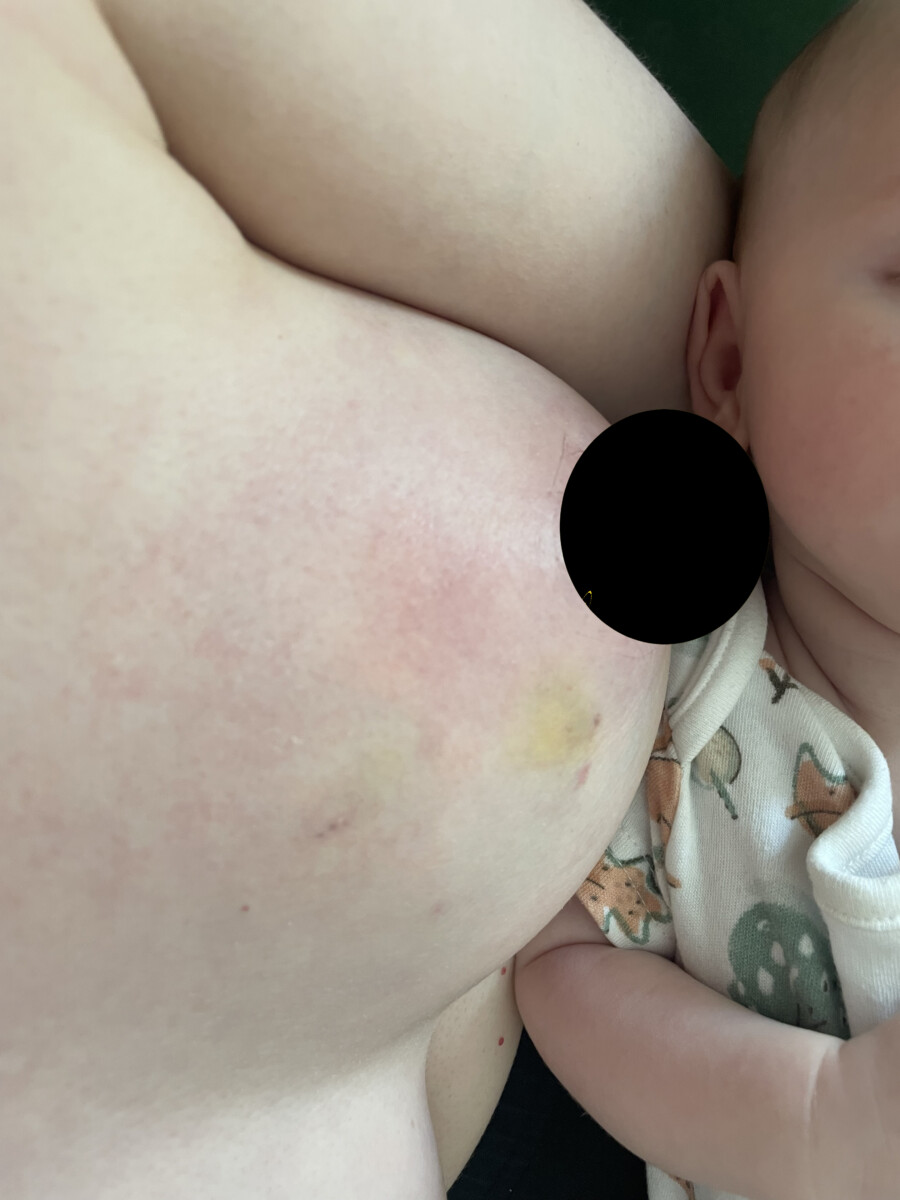
Until February 2025 I went back and forth to the clinic. Waiting my turn to be seen and poked like a pin cushion, usually after everyone else scheduled that day. My boy spent most of his first months there, and all the nurses knew (and loved) him. Throughout this time I was unfortunately on and off antibiotics to combat the infection.
After 7 months: 12 breast specialists, 3 surgeons, 20 procedures, 500ml removed from my breast, I was finally discharged with the complete removal of my breast abscess.
Anxiety post mastitis
Despite the journey being finally over, the emotional rollercoaster and health anxiety from mastitis haunted me. I was scared of getting it again, and if I felt the slightest feeling on a blocked milk duct, I’d panic and be terrified it would turn into another abscess.
If I didn’t genuinely love the bond and know how breastmilk is liquid gold for my son, I would have given up sooner, but as with any anxiety – getting back on the horse is always the best way to combat it. I learned to not be so frightened and got back into my rhythm.
1 year on
If you made it this far, thank you for reading! You deserve a medal. A year on, I am proud to say I am still breastfeeding my son – only once a day – but confidently nonetheless. I am so glad I never gave up on it. I have so many learnings from the experience that as a final note, I wanted to share my key takeaways so that, hopefully, no new mother has to go through what I did.
Key takeaways
- If you get a blocked duct or mastitis, if you can, take the max dose of ibuprofen straight away. This is to reduce the inflammation in your milk ducts. Use a cold compress or breast therapy cold pads to reduce and ease the pain. Continue to feed as normal as well. Don’t massage, overpump or use hot compresses or have hot baths as these will aggravate more.
- Never hesitate to see your GP for mastitis, a lump in the breast or soreness when breastfeeding. Certainly don’t wait until you have chills and a fever! Speed is key – I know it’s not ideal when breastfeeding, but get those antibiotics if you suspect you have mastitis. The alternative is much worse.
- Avoid using silver nipple shields unless you clean everyday with soapy water. They harbour bacteria quickly due to the residue milk, which can cause bacterial mastitis.
- Avoid overpumping or pumping in the first 6 weeks unless you’re exclusively pumping. Your breasts need to learn how much to produce and regulate themselves – your body is guided by your baby, especially initially.
Best of luck with your breastfeeding journeys, and thank you for reading this very personal post.