
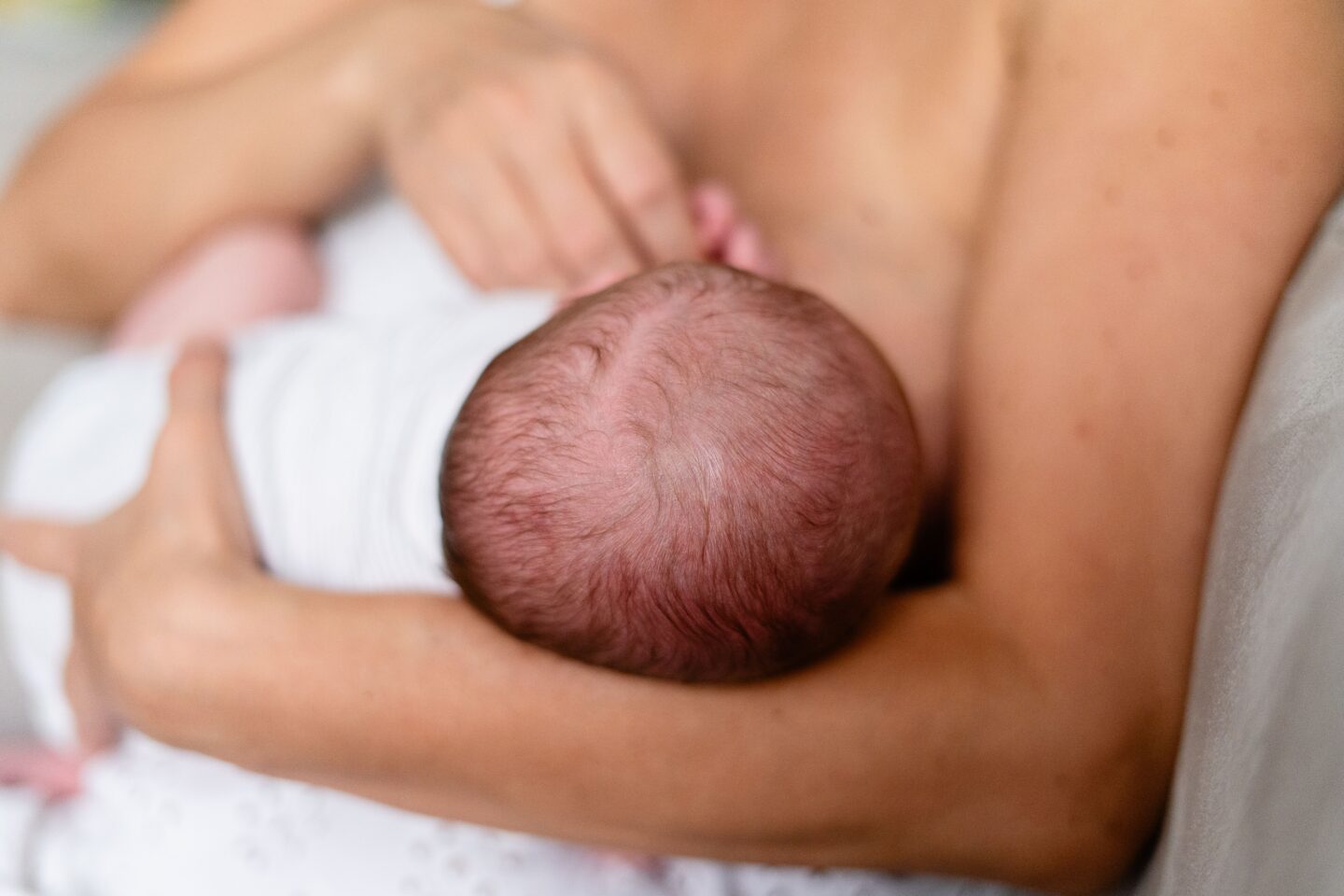
Happy World Breastfeeding Week: August 1st-7th 2026.
This week I calculated that in total so far with my two boys, I’ve been breastfeeding for 547 days. That’s no mean feat and honestly I’m quite impressed with myself for it. Apparently I’ve been burning an extra 500-700 calories a day just by breastfeeding.
With my firstborn, despite my issues with mastitis and a breast abscess which took 7 months to completely aspirate out of my left breast, I breastfed for 15 months. I stopped as I became pregnant with my second, and we had definitely reached the point where he wasn’t that fussed anymore. With my second I’ve been breastfeeding for 3 months now, and it’s going really well, much better than I thought it would!
I’d like to caveat now by saying that breastfeeding isn’t easy, nor is it for everyone. Sometimes mothers combination feed, some exclusively pump, sometimes mothers have no choice but to switch to formula for a variety of reasons, and sometimes mothers simply don’t want to breastfeed. All of those things are completely valid and no one should feel shame or any negative feeling around not breastfeeding. Every person is different, and that’s okay!
Breastfeeding isn’t easy
Breastfeeding is not easy for a plethora of reasons. First off, it doesn’t necessarily come naturally. Sometimes it does, and even then there can be issues. Initially, it can come with nipple pain, latch issues, supply issues, tongue tie issues, nipple blisters, engorged breasts, leaking issues and as in my more unusual case, blocked ducts and mastitis. Not to mention the mental toll which comes with all that.
If you do decide to breastfeed and can push through the first few days, however, once you get into the swing of it, it does become easy and is really convenient.
The positives of breastfeeding (if you are able)
Breastfeeding is great for so many reasons. Some incredible benefits include reducing the risk of ovarian and breast cancers, osteoporosis and heart disease for the mother, and reducing risk of infections, diarrhoea, stomach issues, asthma, diabetes and childhood obesity for the baby. It’s really easy to go out and about as you have the food source ready to go!
Some other miraculous facts about breastfeeding include:
- Babies can smell their mother’s individual milk from up to a metre away, so they know when you’re close! Kissing your babies head can signal to the brain what the baby requires nutrient wise, and your immune system creates antibodies and adjusts to what minerals they need, which then pass through your milk
- Your breastmilk changes flavour when you eat different things. So your baby gets a taste of a variety of foods before even starting solids, although not directly (apparently babies love the taste of garlic!) This can make starting solid foods easier.
- At the start of a feed, your milk is thinner and more bluish in colour, this is the hydrating, thirst quenching milk. Towards the end of a feed, your breastmilk turns thicker into a more nutrient dense, fattier milk which provides the calories.
- Breastmilk is a miracle healer. It’s full of components that fight infections and cut down on swellings. Put it on baby acne, mosquito bites, even a little in your babies eye if they’re gunky!
- In the late 2000s, anthropologist Katie Hinde began to study breastmilk. She found that mothers raising sons produced milk with higher energy content, and mothers raising daughters produced milk with different nutrient and hormone profiles
- Finally breastfeeding promotes oxytocin and bonding between mother and baby. It regulates your babies heart rate, temperate and stress levels. This is by no means every benefit but it’s full of goodness!
Breastfeeding really is amazing, I’ve often heard countless stories of women saving their children by breastfeeding them in crises. Only recently there was a Venezuelan mother who breastfed her three children for 11 days whilst trapped under rubble of a fallen building, saving them all.
The cost of breastfeeding
Whilst breastfeeding is undoubtably positive if you are able to, there is an invisible cost. It’s not “free”, as some people think.
Mothers can face a loss of autonomy when breastfeeding, as they have a little person they need to cart around with them 24/7. Cluster feeding can be exhausting, having nothing to wear as your wardrobe isn’t breastfeeding friendly and the weight of responsibility are all things to consider. Time where you want to sleep, you physically are unable. Mentally it can be very draining, particularly in those first six weeks whilst your supply is regulating.
Not to mention societal expectations which fall on people who breastfeed.
Public perception
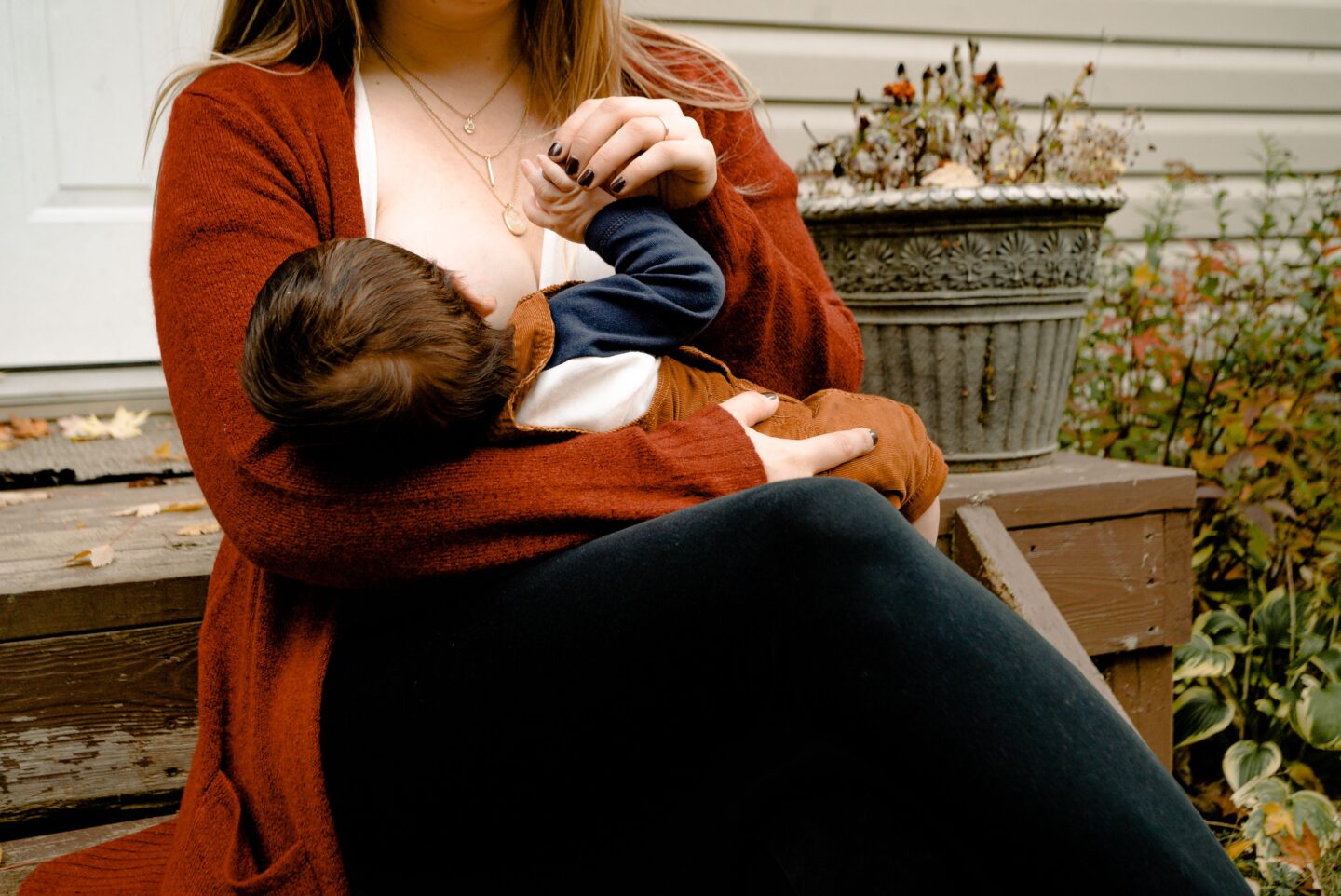
A friend of mine and I were discussing recently the perception of breastfeeding whilst in public. Whilst now I couldn’t give two hoots what people think, there was a time I felt quite self-conscious. Nowadays I just apologise in advance if I flash someone a nipple, but when it really boils down to it – that’s what breasts are made for.
Breastfeeding in public in the UK is legal (the fact that I even need to say that is, in my mind, ridiculous) The Equality Act 2010 makes it illegal for any business or public place to ask you to stop, move, or cover up, or to treat you unfavourably because you are breastfeeding.
Whilst general public sentiment around breastfeeding in the UK is high, around 74% approval in YouGov polls*, that doesn’t stop people from giving you looks or saying rude comments. There’s never more of a time where the hyper-sexualisation of breasts becomes abundantly obvious than when breastfeeding: the perceived embarrassment, the comments of needing to cover up, or go somewhere else to feed, somewhere private.
One male doctor whilst I was in hospital A&E (the emergency room) repeatedly pestered me by asking if I wanted to go into a private room to feed my newborn baby, I said no, not once, not twice but thrice. Three times I pushed back and said I was fine. The problem wasn’t me, it was him. A trained professional who clearly felt uncomfortable, or that it would make other people (of which there were few at this point) feel uncomfortable. How embarrassing, for him.
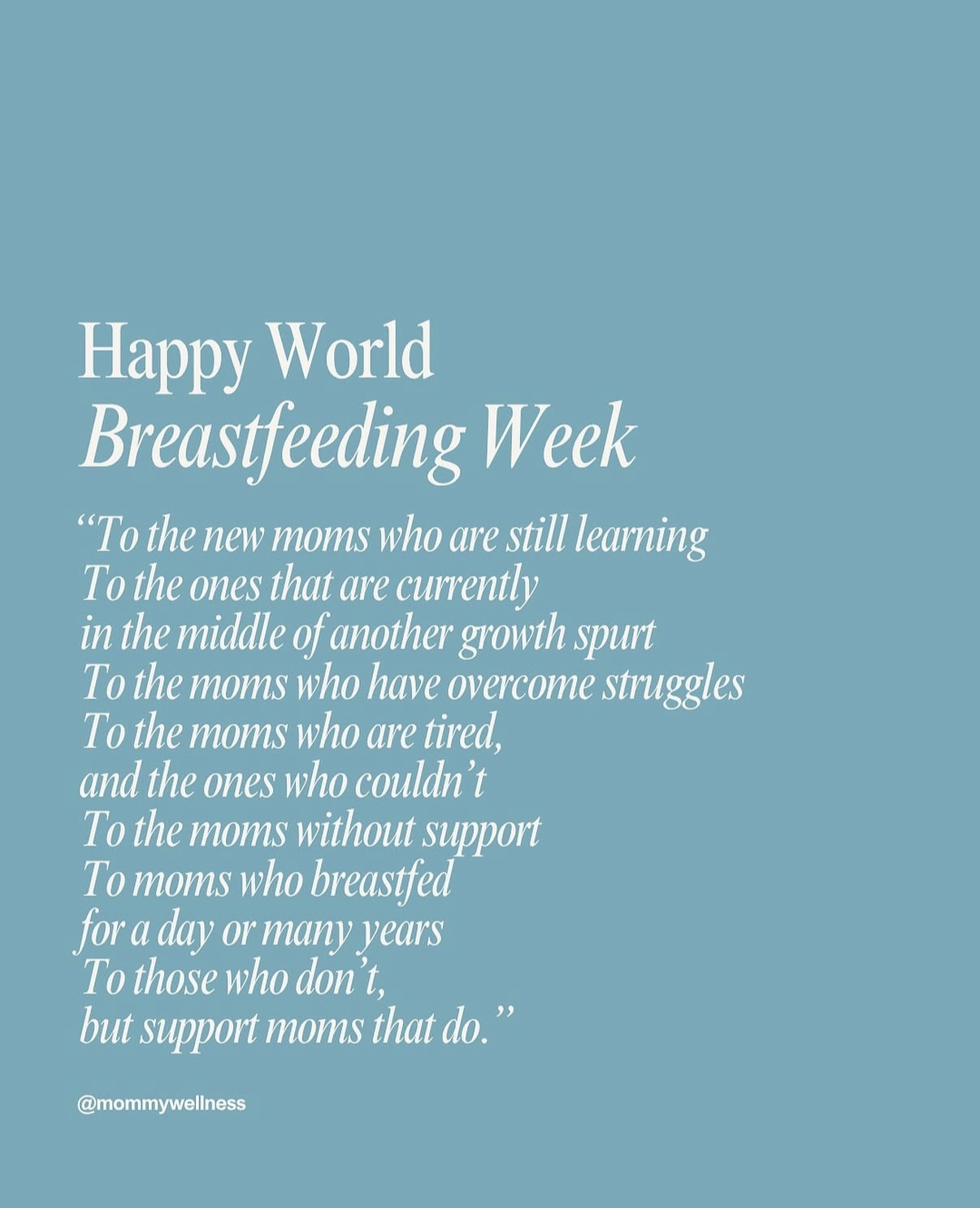
A 2022 study of 17,700 women by researchers at Swansea University and Cardiff University showed women are reluctant to breastfeed outside of their home because of the attitudes of the general public.
Researchers at Swansea University’s Centre for Lactation, Infant feeding and Translational Research, who led the study, Dr Aimee Grant, said: of “the attention of members of the public who observed breastfeeding was incorrectly focused on mothers sexualised women, rather than caregivers to infants who needed feeding”.
Some useful comeback retorts I hope you never need to use:
- “The only thing that’s strange is that you’re focusing on my chest, as opposed to my baby drinking milk”
- “Do you like to eat your meals under a blanket/ in the loo / [insert suggested place]?”
- “Would you like to borrow a cover to put over your head?”
- If you’re feeling brave: “I’m feeding my child, it’s perverted that you’re sexualising a baby eating”
- “Is there something wrong with you?”
- “You are having your lunch, so is my baby”
- Just laugh at them
- Tell them to mind their own business
Why world breastfeeding week exists
World breastfeeding week was first set up in 1992 by the World Alliance for Breastfeeding, The World Health Organisation and UNICEF to promote and reestablish the global culture of breastfeeding, and provide support everywhere.
In 2024, a really in-depth UK government study was conducted an Infant feeding survey, asking mothers in England about their experiences of feeding their infants. Of those surveyed, 94% of mothers who breastfed initially were still doing so after one week, 91% were still breastfeeding at 2 weeks, and 82% at 6 weeks. Prevalence of breastfeeding decreased gradually during the early weeks, falling to 58% at 6 months, despite the WHO recommendation that babies are breastfed until two years old.
World Breastfeeding Week aims to highlight the huge benefits that breastfeeding can bring to the health and welfare of babies and benefits to maternal health, focusing on good nutrition, poverty reduction, and food security. World breastfeeding week has the dual goal of improving the health of babies and promoting, protecting, and supporting the rights of women to breastfeed anywhere and at any time.
Increasing breastfeeding to near-universal levels could save more than 700,000 lives every year, the majority being children under six months.
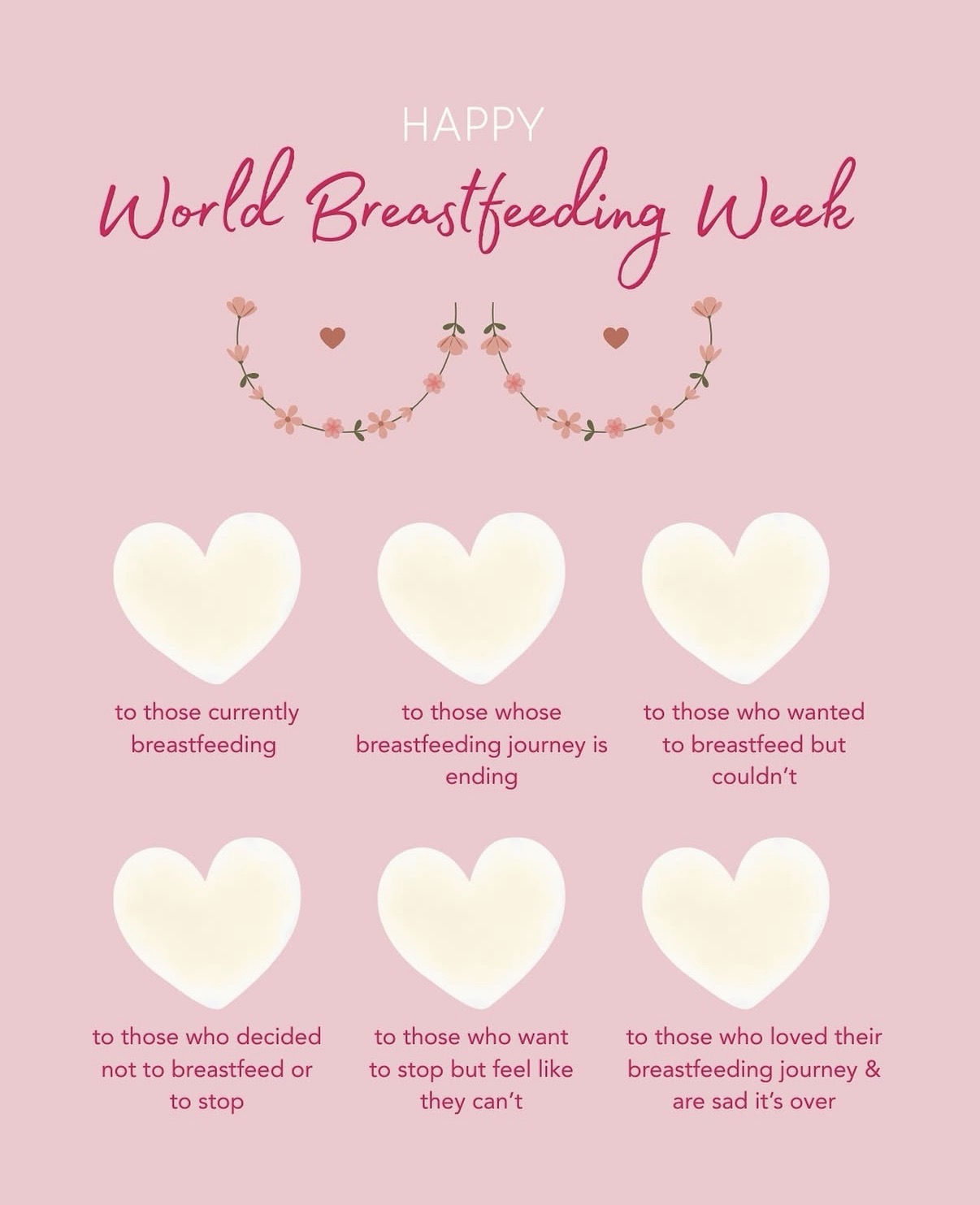
Overall, breastfeeding is a wonderful bonding experience, and provides the perfect nutrients for your baby. I’ve loved being able to breastfeed my boys and I hope for any mothers who want to, can enjoy it too.
Whether you have tried to feed and were unable, or had to stop, currently feeding or breastfed for years: all journeys should be acknowledged and celebrated!
If you need support in the UK, here are some really helpful resources:
National breastfeeding helpline
Happy world breastfeeding week!